Part 2 of 5: The Ceramic, Glass and Mosaic Series
Walk down almost any street of late 19th or early 20th century housing in Belgium, the Netherlands, or the UK, and you will see it — if you know what to look for.
Not the plain red or yellow brick that makes up the bulk of the wall. The other brick. The one with a surface that catches the light differently. The one in cream, or pale green, or deep ochre, or blue-grey. The one that, when you look closely, has a faint sheen — not quite glossy, but not matt either.
Glazed brick.
It is everywhere in the architecture of this period, and it is almost universally misunderstood, misidentified, and incorrectly treated when restoration is needed. It deserves its own post.
What glazed brick actually is
Glazed brick is a standard fired clay brick — in all structural respects identical to its unglazed neighbours — on which a glaze has been applied to one or more faces before or after firing. The glaze is a vitreous coating: a glass-like layer fused to the clay surface at high temperature, creating a surface that is hard, smooth, impermeable, and permanent.
The colour comes from metal oxides added to the glaze mixture. Iron oxides produce yellows, reds, and browns. Cobalt produces blue. Copper produces green. Manganese produces brown and black. The specific colour depends on the oxide, its concentration, the base glaze composition, and the firing temperature and atmosphere — which is why matching historic glazed brick is considerably more difficult than it might appear.
The glaze is not paint. It cannot be removed and reapplied. It is not a coating applied after the brick left the kiln and later added to a building. It is part of the brick — fired into its surface, chemically bonded to the clay body. When the glaze fails, it cannot be restored to its original condition. It can only be replaced.
Why it was used
Glazed brick served multiple purposes in the architecture of the late 19th and early 20th century, and understanding those purposes helps explain where it appears and how it should be treated.
Durability and water resistance. The glaze creates an impermeable surface that repels water and resists the absorption of atmospheric pollutants. In the heavily polluted urban environments of the industrial era — where coal smoke, soot, and sulphur dioxide settled on every surface — a glazed brick facade was significantly easier to keep clean than an unglazed one. This was a practical consideration as much as an aesthetic one.
Visual effect. Glazed brick reflects light in a way that unglazed brick does not. On a terrace of identical houses, a facade with cream or pale green glazed brick reads as lighter, more refined, and more expensive than its neighbours. Architects and developers used glazed brick as a signal of quality — a material choice that communicated something about the building’s status.
Polychrome decoration. In Art Nouveau architecture particularly, glazed brick in multiple colours was used to create decorative effects that integrated the brick itself into the architectural composition. Bands, panels, and accents of differently coloured glazed brick created visual patterns without the need for applied decoration.
Hygienic applications. In hospitals, dairies, abattoirs, and other buildings where hygiene was a priority, glazed brick or tile — impermeable, easy to clean — was specified for interior and exterior surfaces. This is a different application from domestic facade use, but it is part of the same ceramic tradition.
Where it appears
On residential facades, glazed brick appears most commonly in specific locations rather than across the entire wall surface.
String courses and banding — horizontal courses of glazed brick used to articulate the facade horizontally, typically at floor levels or between window openings.
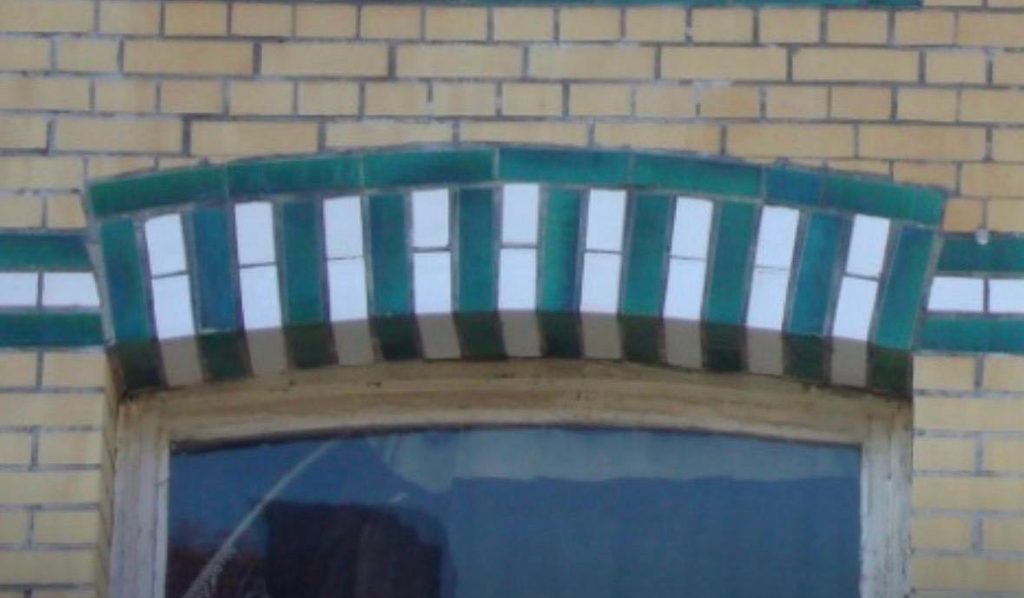
Window surrounds and arches — glazed brick used to frame window openings, sometimes in a contrasting colour to the main wall material.
Plinths and lower courses — glazed brick at the base of the facade, where its water resistance is most valuable and where visual contrast with the main wall material creates a base to the composition.
Full facade cladding — on some Art Nouveau buildings, glazed brick covers the entire street facade. These are among the most demanding restoration challenges, because matching the original glaze colour across a large area of replacement brick is extremely difficult.
The restoration challenge
Restoring a historic glazed brick facade presents specific challenges that do not arise with unglazed masonry, and that are not always understood by craftspeople who have not worked with the material before.
Matching is difficult. Historic glazed brick was produced in small quantities by manufacturers who no longer exist, using glaze formulations that have not been recorded. The colour of glazed brick changes with the viewing angle and lighting conditions — a brick that matches under overcast sky may read differently in direct sun. And glazed brick weathers differently from unglazed — the glaze surface develops a particular character over decades that new brick cannot replicate.
The cause of failure must be understood before replacement. Glazed brick fails for several reasons: the glaze delaminates from the clay body due to differential thermal expansion; the brick body itself cracks or spalls due to frost damage or salt crystallisation; the pointing around the brick fails and allows water penetration that then attacks the brick from behind. Replacing a failed glazed brick without understanding why it failed means the replacement will fail in the same way.
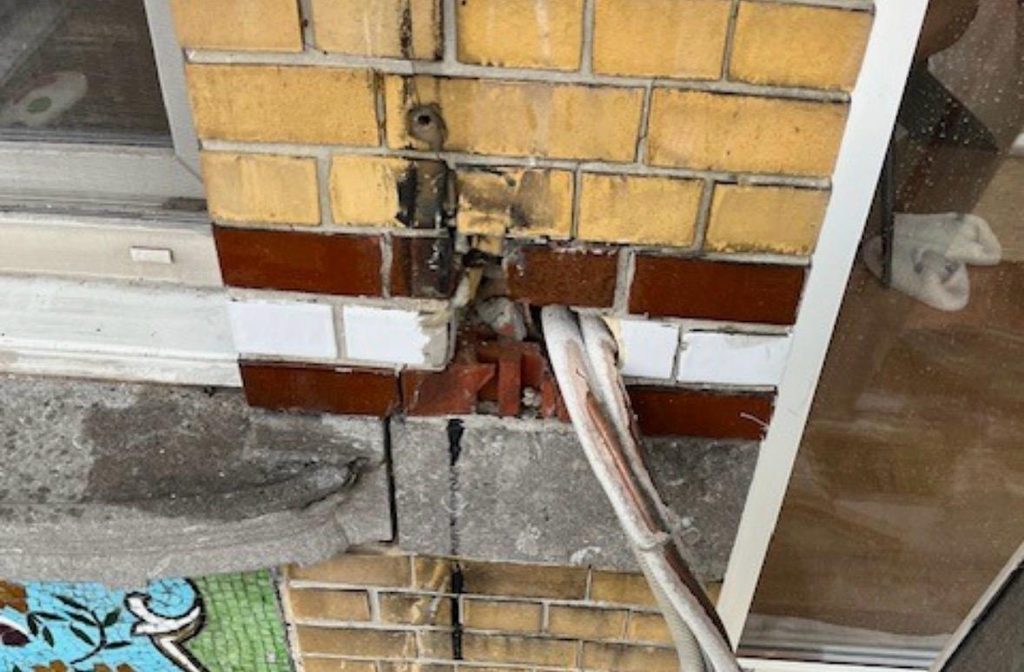
Repointing glazed brick requires specific attention to mortar specification. The mortar at the joint of a glazed brick facade is performing the same sacrificial function as any lime mortar — but it is doing so against a brick face that is impermeable. This changes the moisture dynamics at the joint. Mortar that is appropriate for unglazed brick may behave differently against a glazed face, and the specification should reflect this.
Painting over glazed brick is not an option. It is done — regularly, by owners and contractors who do not understand what they are looking at. The paint traps moisture, fails quickly, and leaves the glazed surface in a worse condition than before. If the glaze itself is in poor condition, the solution is specialist assessment and appropriate repair or replacement — not paint.
Melissa and the Guild
Melissa, one of RestoreFacade’s founding members in Belgium, works with glazed tile and glazed brick on historic facades — the sourcing, the assessment, the restoration. Her knowledge of this specific material — what it is, how it was made, how it fails, and what can be done about it — is exactly the kind of practitioner knowledge that is difficult to find and easy to lose.
If you are working on a building with glazed brick and have questions, the Guild is the place to ask them. If you have experience with this material and want to share it, the Guild is the place to do that too.
A question to the Guild
Have you encountered glazed brick on a facade project where matching replacement brick was needed? How did you approach the sourcing — and how close did you get to the original?
And for those who have worked in Belgium and the Netherlands particularly: have you noticed significant differences in the glaze types and colours used in different regions or periods?
RestoreFacade Guild — for the craftspeople who look closely enough to see the difference.
Next in the series: Mosaic Panels in Facades — how they were made, how they were fixed, and what happens when they fail.