An opinion, an invitation, and an open discussion for the Guild
Once the preparation is done properly — and if you haven’t read the previous post on
metallising and 2K paint, start there — the question that remains is one that divides
craftspeople more than almost any other.
What colour do you paint it?
For historic ironwork on Art Nouveau façades, this is not a trivial question. It’s an
aesthetic decision with real consequences for how a building reads on the street, how it
ages, and how faithfully it honours the original vision of the architect who designed it.
I have an opinion on this. I’ll share it — but I’m more interested in starting a conversation
than winning an argument.
What Art Nouveau was actually saying
Art Nouveau was not an accident of style. It was a deliberate rejection of the industrial
rigidity that preceded it — a movement that looked to nature for its forms, its rhythms,
and its philosophy.
The ironwork on an Art Nouveau façade is not decorative in the conventional sense. It
doesn’t just ornament the building — it is the building’s language. The flowing lines, the
botanical curves, the asymmetric compositions — these were chosen to evoke living
things. Plants. Vines. The movement of water. The logic of growth.
Understanding that changes how you think about colour.
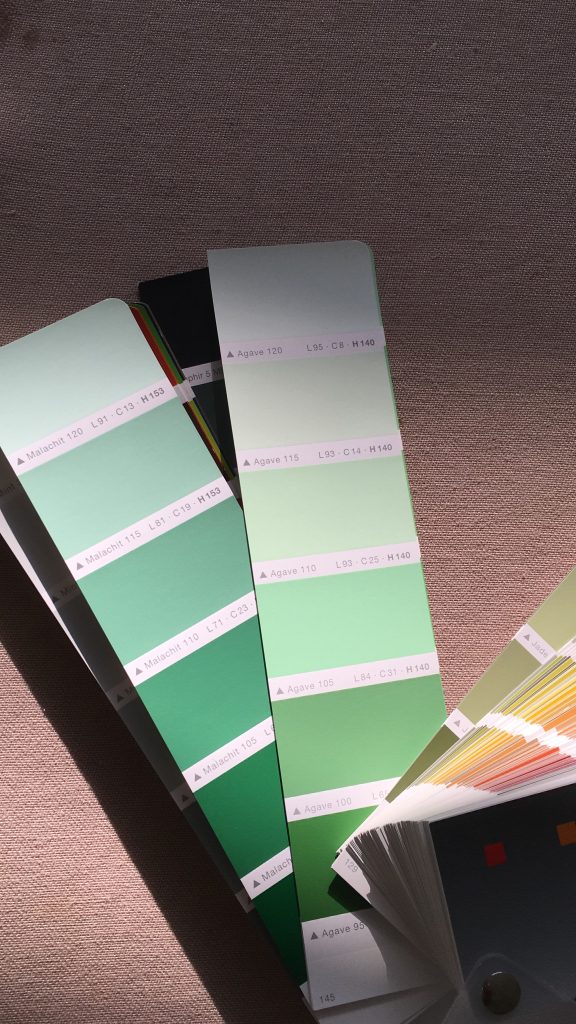
The case for green
My own preference — and I’ll be clear that this is a personal view — is a soft, muted
green. Not bright. Not saturated. Something closer to the colour of aged copper, or
young leaves in partial shade. A tone that sits quietly on the façade rather than
demanding attention.
Here’s my reasoning.
Green is the colour most directly associated with the natural world that Art Nouveau
drew its inspiration from. Applied to ironwork that already speaks in the language of
plants and organic forms, it completes the thought. The metal stops reading as metal
and starts reading as something that grew there.
It also has a lightness to it. A green-finished balcony or window grille doesn’t weigh
down a façade the way black can. It breathes. And on a building that was designed to
feel alive, that matters.
That said — the rest of the façade has the final word. The colour of the stone, the render,
the woodwork, the window frames, the corniche. Green works beautifully in some
combinations and fights with others. No colour decision on ironwork exists in isolation.
The arguments for black
I understand the case for black, and I respect it.
Black is historically grounded. A great deal of historic ironwork was finished in black or
very dark tones, and there’s something honest about that — it doesn’t pretend to be
something it isn’t. It’s iron. It’s strong. It endures.
Black also has a graphic quality that can work powerfully against light stone — the
contrast is clean, the lines read clearly from a distance, and the decorative detail stays
legible even in flat light.
For certain façades, certain compositions, certain colour palettes in the surrounding
stonework — black is simply the right answer.
Anthracite, bronze, and the question of originality
Between green and black, there’s a range of choices that have become increasingly
common in recent restorations — anthracite grey, dark bronze tones, deep olive.
These are often compromise positions, and not necessarily weaker for it.
But the most interesting question — and the one I’d put to the Guild — is this:
What was the original colour?
Historic paint analysis on surviving Art Nouveau buildings has produced surprising
results in some cases. Not always black. Not always what we might expect. If the
original specification survives, or if paint layers can be analysed, that information should
carry significant weight in any restoration decision.
The Venice Charter is clear on this point: restoration should reveal the authentic state of
an object while respecting its historic material. Choosing a colour for aesthetic reasons
alone, when evidence of the original exists, is a choice worth examining carefully.
What I’d love to hear from the Guild
This is where I hand it over.
Have you worked on Art Nouveau ironwork — or any historic decorative metalwork — and
faced this colour decision? What did you choose, and why? Did you have access to
original specifications or paint analysis? And if you’ve tried green, anthracite, or
anything outside the standard black — what was the result?
There’s no single right answer here. But there are better and worse reasons for the
choices we make. And those reasons are worth sharing.
The ironwork on these buildings has survived long enough to deserve a
considered decision.
RestoreFacade Guild — for the craftspeople who think before they paint.